Why Do People Invest in CS2 Skins?
CS2 skins are purely cosmetic — they don’t change your gameplay, but they can dramatically change the look and prestige of your weapons. Over time, some skins become highly valuable because of rarity, demand, and limited availability.
Why Skins Gain Value Over Time
- Case removal: Valve removes certain cases from the active drop pool.
- Limited event exclusives: Stickers or skins released for a short period never return.
- Influence of streamers & pros: Popular players use certain skins, driving demand.
- Rarity + demand = value: Just like collectible cards or NFTs, scarcity increases worth.
Where to buy CS2 Skins?
The most common place to buy CS2 Skins is directly on the Steam Community Marketplace, however, it is also the most overpriced place for skins. Experienced traders always use third party marketplaces, where skins are on average 30% cheaper. You can explore our list of trusted CS2 marketplaces and find one suitable for you after reading fee breakdowns, user reviews and our review.
Best Types of Skins to Invest In
1. Discontinued Cases & Rare Drop Pool Items
Once cases are no longer in active drops, skins inside become harder to obtain. Examples:
- CS:GO Weapon Case (Series 1–3)
- eSports 2013 Case
- Operation Bravo Case
- Revolver Case (now in rare drop pool)
Why they’re good investments:
- Available on Steam Market but with dwindling supply.
- Opening them can yield high-value skins.
- Supply drops each year, demand often rises.
2. Old or Discontinued Skin Collections
Many collections were tied to specific events. Once the event is over, skins never return.
Examples:
- Cobblestone Collection (Souvenir AWP | Dragon Lore)
- Dust Collection (Desert Eagle | Blaze)
- Gods and Monsters Collection
- Canals Collection
Why they hold value:
- Permanently limited availability.
- Souvenir Major drops can be worth tens of thousands of dollars.
3. Tournament Stickers (CS:GO & CS2 Majors)
Each CS2 Major features team and player autograph stickers that disappear after the event.
What to look for:
- Gold or Holo versions (rare).
- Popular players & teams (FaZe, NAVI, s1mple, ZywOo).
- Capsule type: Legends, Challengers, Contenders.
Top investments:
- Katowice 2014 Stickers — now worth thousands.
- Stockholm 2021 Capsules.
- Krakow 2017 (home of the most expensive player sticker — s1mple).
How to Actually Invest in Skins
Step 1: Learn the Market
Use reputable platforms:
- Steam Community Market (official)
- buff.163.com (China-based, strong price tracking)
- csfloat (float values & bargains)
Step 2: Pick an Investment Style
Do you want to:
- Hold discontinued cases long-term?
- Flip trending skins monthly?
- Collect souvenirs for future collector demand?
Even €20/month can build a valuable inventory over time.
Step 3: Organize with Storage Units
On Steam, you can store and label skins by year, tournament, case type, or rarity. This makes it easy to manage and sell later.
Factors That Boost Skin Prices
- Pro players or streamers using the skin.
- Popular sticker crafts increasing demand.
- Case/map removal by Valve.
- New updates improving skin visuals (e.g., Dopplers in CS2).
- Growing player base.
Risks That Could Lower Prices
- Map reintroduction (collections drop again as souvenirs).
- New skins that outshine older designs.
- Market panic from bans or restrictions.
Tips for First-Time Skin Investors
- Start with older stickers or cases — less risky.
- Avoid hyped, brand-new skins (they usually drop in value early).
- Always check supply — scarcity drives value.
- Only invest what you can afford to lose.
Popular Long-Term CS2 Skin Investments
| Item | Type | Reason to Buy | Est. 3-Year Growth |
|---|---|---|---|
| Operation Bravo Case | Discontinued Case | Low supply, old skins | High |
| Cobblestone Collection | Map Skin Collection | Dragon Lore souvenir | High |
| Stockholm 2021 Stickers | Tournament Sticker | Cheap now, strong demand | Medium |
| eSports 2013 Case | Early Case | Nostalgia + rarity | High |
| Katowice 2019 Capsules | Sticker Capsule | Popular teams | Medium |
Best Time to Buy CS2 Skins
1. One Month After a Major Event
- New updates flood the market with items.
- Prices dip after initial hype.
- Old skins hit their lowest before rebounding.
2. Two Weeks Into a Steam Sale
- Players sell skins for wallet credit.
- Temporary oversupply drives prices down.
- Experienced traders buy during dips.
Predictable yearly trends:
- Post-Major dips
- Operation case dumps
- Steam Summer/Winter Sale crashes
Invest in CS2 Skins Like Company Shares
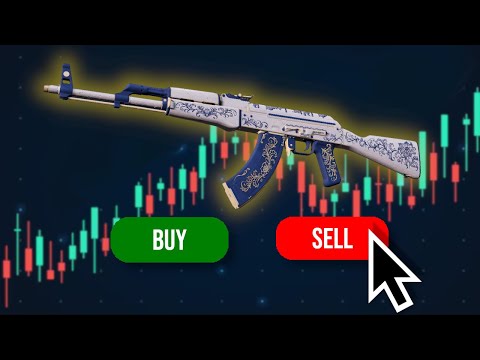
Most CS2 investing is about buying skins and waiting for their value to rise — but there’s now another approach: investing in CS2 skins like you would in company stocks through Tradeit.gg’s Investing Feature.

How It Works
- You deposit money into Tradeit.gg’s shared skin inventory.
- In return, you own a percentage share of all the skins they use for trading.
- Whenever players trade on Tradeit.gg, the platform takes a small fee (~5%).
- A portion of that fee (1%) goes back to investors, regardless of whether skin prices rise or fall.
Example Scenario
- You invest $10,000 into a $1.2M inventory → You own 0.83%.
- On a day when Tradeit.gg processes $250,000 in trades:
- 1% of $250,000 = $2,500 is shared among all investors.
- You’d get 0.83% of $2,500 = $20.75 for that day.
- Estimated annual yield is around 28%, depending on trading volume.
Why This Is Different from Traditional Skin Investing
- Your returns come from market activity, not skin price speculation.
- Profit potential even if skin prices drop temporarily.
- Works more like owning a stock or ETF of skins rather than individual items.
Things to Keep in Mind
- Yield depends on trading volume and your share size.
- This is still a third-party platform, so there’s platform risk.
- You don’t directly control which skins are in the inventory.
For traders who want steady, volume-based returns instead of gambling on market swings, this method is worth exploring as part of a diversified CS2 investment strategy.